
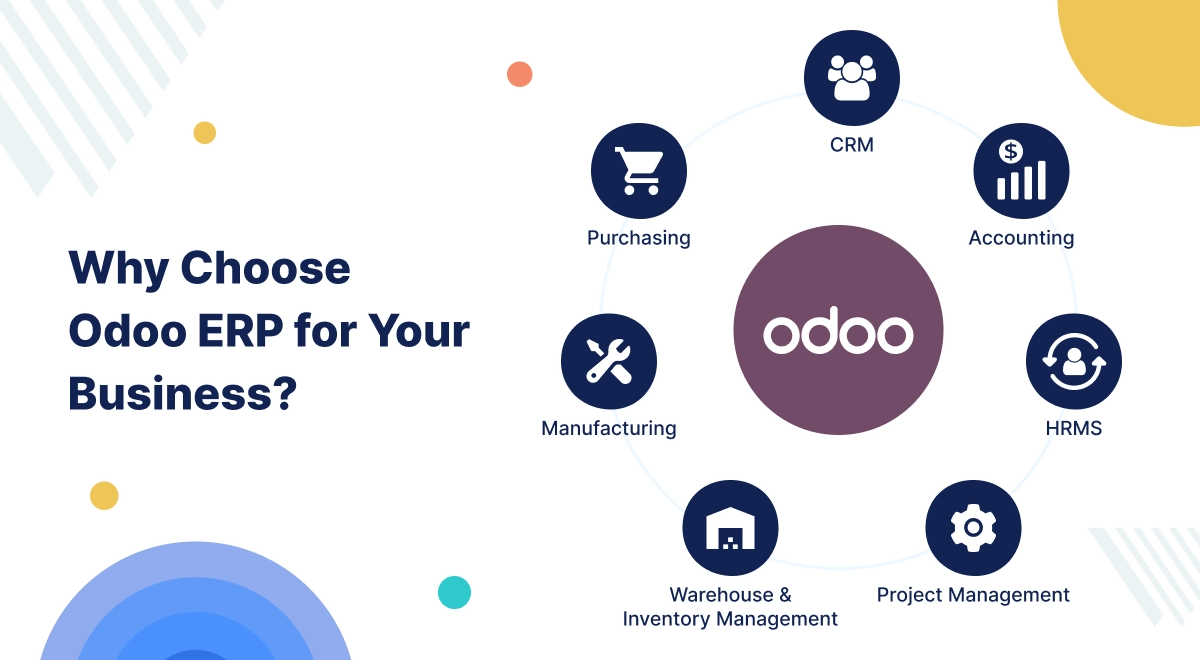
The world of digital commerce is evolving at an unprecedented pace leading up to 2026. Merely opening an "online store" is no longer enough; the main issue for modern eCommerce entrepreneurs is how to manage post-sale processes - inventory, accounting, shipping, and customer service. Many entrepreneurs struggle to choose among popular platforms like Shopify, WooCommerce, or Magento. However, the fully integrated approach offered by Odoo eCommerce makes it a unique solution, especially for growing SMEs. In this blog post, based on official sources and market analyses, we will present the strongest aspects of choosing Odoo in eCommerce and compare it with other platforms.
Introduction: The "Data Silos" Problem in eCommerce
Most eCommerce platforms (such as Shopify or WooCommerce) act only as a "sales window." This means that when an order comes in, you need another accounting software to manage that order, a third tool to track your inventory, and a fourth CRM system to communicate with the customer. Making these different programs "talk" to each other requires expensive integrations (connectors) or manual data entry, which creates "data silos."
The built-in eCommerce module of Odoo ERP solves this problem at its root. In Odoo, an eCommerce site is not just a "storefront"; it is an integral part of an entire business management system. The moment an order is placed, the whole system (warehouse, finance, purchasing) goes into action in real-time.
Odoo eCommerce vs Shopify, WooCommerce, and Magento: A Comparative Analysis
Choosing the right platform directly affects both ease of use and long-term costs. Let's compare these four giant platforms based on official technical documentation and user reviews (Gartner Peer Insights):
1. Integration and Functionality
| Platform | Description |
|---|---|
| Odoo | Native (built-in) integration. ERP, CRM, Accounting, and Inventory are on the same database. |
| Shopify | App-based. For every additional feature, you need to download monthly paid apps from the Shopify App Store. |
| WooCommerce | Plugin-based. Too many plugins can slow down the site and create security vulnerabilities. |
| Magento | Complex API integrations. It is powerful, but every integration requires a professional team of developers. |
2. Pricing and Total Cost of Ownership (TCO)
| Platform | Description |
|---|---|
| Odoo | Transparent pricing. With the Odoo Online plan, there are no server costs; all apps are included in one price. |
| Shopify | Monthly subscription + transaction commission on every sale + cost of paid apps. As sales volume increases, costs rise sharply. |
| WooCommerce | The software is free, but a significant budget is required for hosting, SSL certificates, security updates, and ERP integration. |
| Magento | Very expensive. License (for the Enterprise version) and server costs can amount to tens of thousands of dollars annually. |
3. Ease of Use
| Platform | Description |
|---|---|
| Shopify | The easiest platform, but customization options are limited. |
| Odoo | Very convenient with its "drag-and-drop" site builder. At the same time, it provides a full ERP management panel. |
| WooCommerce | Mid-level; requires WordPress knowledge. |
| Magento | Very complex; learning the admin panel takes a long time. |
| Criterion | Odoo | Shopify | WooCommerce | Magento |
|---|---|---|---|---|
| Initial Costs | Affordable | Medium | Low | Very High |
| Sales Commission | 0% | 0.5% - 2% | 0% | 0% |
| Inventory Management | Excellent | Basic level | Weak | Strong |
| Accounting | Fully Integrated | Third-party App needed | Third-party Plugin needed | Third-party API needed |
Why Should eCommerce Entrepreneurs Choose Odoo? 5 Main Reasons
According to official sources (Odoo.com and Gartner Magic Quadrant), here are 5 strategic advantages Odoo offers for eCommerce:
1. Fully Automated Order and Inventory Management
The moment a customer places an order in Odoo, the system automatically checks the inventory balance. If the product is out of stock, the system can automatically prepare a request for quotation (RFQ) for the supplier. This allows implementing the "Just-in-Time" principle, which prevents the freezing of working capital for SMEs.
2. Ease of Omnichannel Sales
Through Odoo, you can sell not only on your own site but also on Amazon, eBay, or your physical stores (POS - Point of Sale). Orders and inventory balances from all these channels are managed from a single center. In Shopify or WooCommerce, such omnichannel synchronization requires additional paid services (e.g., Linnworks or ChannelAdvisor).
3. Unified SEO and Digital Marketing Tools
Odoo eCommerce's built-in SEO tools (meta tags, clean URLs, automatic sitemap) help your site rank higher in search engines. Additionally, with Odoo's Marketing module, you can send automated email campaigns to your customers, recover abandoned carts, and manage social media posts. Everything is within one panel.
4. Transparent and Efficient Pricing Model
Predicting costs is critical for eCommerce beginners. In Shopify, as your sales increase, the commissions you pay also increase. In Odoo, there is no transaction commission. You only pay an annual subscription fee, and regardless of your sales volume, you keep all your profits.
5. International Growth Opportunities
Odoo perfectly supports multi-language and multi-currency sales. If you want to sell your products to foreign markets, Odoo automatically adjusts taxes (VAT/GST), shipping costs, and exchange rates for each country.
Examples of How Odoo Simplifies the Work of eCommerce SMEs
Implementing Odoo means saving time and resources in daily operations. Here are a few practical scenarios:
Example 1: Automatic Shipping and Tracking
When a customer places an order on your site, Odoo automatically connects with DHL, FedEx, or local delivery services, prints the shipping label, and sends the tracking number to the customer. No manual work is needed.
Example 2: Dynamic Pricing Policy and Discounts
With Odoo's "Pricelists" feature, you can set automatic discounts for certain customer groups (e.g., VIP customers) or for specific dates. The system applies these discounts simultaneously on both the eCommerce site and the physical store.
Example 3: Customer Portal and Self-Service
Your customers can log into their personal accounts to track order statuses, download invoices, or submit Return Merchandise Authorization (RMA) requests. This reduces the workload of the customer service department by up to 40%.
Conclusion: Future-Ready eCommerce
In 2026, eCommerce is no longer just about selling products; it is about providing the customer with a perfect experience and maximizing the automation of internal processes. Odoo eCommerce, with its ERP-centric approach, offers entrepreneurs not just a website, but a growth-ready business engine. Combining the ease of Shopify with the power of Magento, Odoo is the most logical and efficient choice for modern eCommerce entrepreneurs.
If you too want to get rid of "data silos," optimize your costs, and manage your business from a unified center, it is the perfect time to step into the world of Odoo.