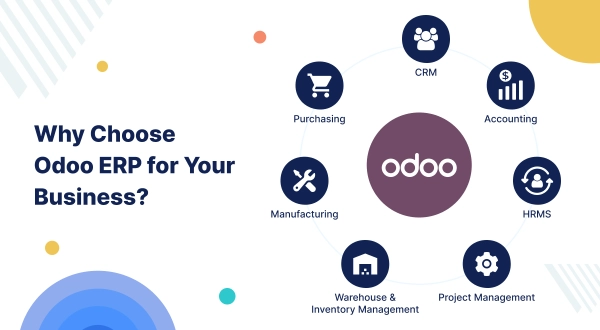
For any entrepreneur engaged in manufacturing, the most critical question is the correct determination of the Cost of Goods Manufactured (COGM). Inaccurate calculation of COGM leads to misguided pricing policies, decreased profits, and serious errors in making strategic decisions. In Azerbaijan, manufacturing accounting is regulated by both International Financial Reporting Standards (IFRS) and local accounting rules. In this blog post, we will explore in detail the structure of COGM according to Azerbaijani legislation, calculation methods, and how the Odoo ERP system automates this complex process.
Introduction: The Strategic Importance of Cost of Goods Manufactured
In manufacturing, COGM is the sum of all direct and indirect costs incurred to produce a product. Proper calculation allows the entrepreneur to set competitive sales prices, identify bottlenecks in production, and optimize costs. In Azerbaijan, the Law "On Accounting" and National Accounting Standards demand that the accounting of production costs be conducted transparently and systematically.
Structure of COGM According to Azerbaijani Accounting Legislation
Based on Azerbaijan's accounting standards (specifically Standard No. 2, "Inventories"), the cost of a product is formed from three main cost groups:
1. Direct Materials This includes raw materials, components, and supplies that become part of the product. These costs can be directly attributed to a specific product unit. For example, wood, fabric, and glue used in furniture production are direct material costs.
2. Direct Labor This includes the wages of employees directly participating in the production process and the social insurance deductions (DSMF) calculated from those wages. During payroll accounting in Azerbaijan, the requirements of tax legislation (income tax, mandatory state social insurance, unemployment insurance, and mandatory medical insurance) must be taken into account.
3. Manufacturing Overheads These are costs that cannot be directly attributed to a specific product unit but are necessary for the continuation of the production process. This includes:
-
Depreciation of manufacturing equipment and buildings.
-
Salaries of shop management and auxiliary staff.
-
Electricity, gas, water, and other utility costs used in production.
-
Equipment repair and maintenance costs.
"In Azerbaijani accounting practice, various bases (e.g., direct labor, machine hours, or material costs) are used to allocate these indirect costs among products."
COGM Calculation Methods
Depending on the company's production type, one of the following methods must be chosen:
| Method | Description |
|---|---|
| Job Costing | Collecting costs for each individual order or batch of products (e.g., shipbuilding or custom furniture orders). |
| Process Costing | Allocating costs by stages in mass production (e.g., cement or flour production). |
| Standard Costing | Comparing predetermined cost standards with actual costs. |
Automating COGM with Odoo Manufacturing (MRP)
The Odoo ERP system allows manufacturing enterprises to calculate COGM without human intervention, in real-time. Here are the official solutions Odoo offers:
1. Bill of Materials (BoM) and Material Accounting In Odoo, a "Bill of Materials" (BoM) is created for each product. When a Manufacturing Order (MO) is created, the system automatically deducts the necessary raw materials from inventory balances and adds their value (according to AVCO, FIFO, or Standard Price methods) to the COGM.
2. Work Centers and Operational Costs In Odoo, every piece of manufacturing equipment or area is defined as a "Work Center." An Hourly Cost is set for each work center. This cost includes both the employee's wage and the depreciation and energy costs of that equipment. The time spent during the production process (machine-hours or man-hours) is automatically calculated into the COGM.
3. Allocation of Manufacturing Overheads Through Odoo's "Analytic Accounting" module, indirect costs are fairly distributed among manufacturing orders. This makes the indirect cost allocation process required by Azerbaijani accounting standards completely transparent.
Real Scenario: Cost Analysis in Odoo
Imagine a company producing plastic containers. When a manufacturing order is completed in Odoo, management sees a "Cost Analysis" report:
| Cost component | Details |
|---|---|
| Raw Materials | 100 kg of plastic pellets (at actual price). |
| Labor | 2 hours of operator work (based on work center cost). |
| Energy | Calculated kWh value for 2 hours of equipment operation. |
| Total | The system automatically calculates the actual cost of each unit of product and enters it into the finished goods inventory (Finished Goods) at that price. |
This approach eliminates the practice of "manual calculation of costs at the end of the month," which is frequently encountered in Azerbaijan, and reduces the probability of error to zero.
Localization for Azerbaijani Conditions
The advantage of Odoo for the Azerbaijani market is its easy adaptation to local tax and accounting rules:
-
AVCO Method: The "Average Cost" (AVCO) method, the most widely used in Azerbaijani accounting, is natively supported in Odoo.
-
E-invoice Integration: E-invoices received during the purchase of raw materials enter directly into Odoo and form the initial base of the cost.
-
National Currency: All calculations are carried out in AZN, and raw materials purchased in foreign currency are automatically converted at the exchange rate of the Central Bank of Azerbaijan (CBAR).
Conclusion
Correct calculation of the Cost of Goods Manufactured is the "health indicator" of a manufacturing enterprise. Modern accounting standards and tax legislation in Azerbaijan require accuracy and transparency in this area. The Odoo ERP system, with its official manufacturing (MRP) and accounting modules, allows entrepreneurs to calculate costs in seconds, track expenses in real-time, and build a more profitable business. Digital transformation is no longer a choice but a necessity to gain a competitive advantage in manufacturing.